 |
SMK
v0.0.1-2561
Simple Message Keeper
|


|
|
SMK
v0.0.1-2561
Simple Message Keeper
|
|
SMK is a single binary with multiple commands and optional parameters.
| Command | Parameters | Example | Description |
|---|---|---|---|
reset | smk reset | Erase all previous messages. | |
clean | smk clean | Keep only a few recent messages. | |
unique | <priority> <text> | smk unique 2 "Device has rebooted." | Add a new message. If an existing similar message already exist, will remove the old message. Priority is 0=high, 1=medium, 2=low, anything else is other. |
add | <priority> <text> | smk add 3 "Service will restart." | Add or update a message. If an existing similar message already exist, will incrememnt the duplicate message counter. Priority is 0=high, 1=medium, 2=low, anything else is other. |
del | <id>|<text> | smk del reboot | Erase an existing message. The ID is 1-based. If instead text is given, then all messages with partial word match will be removed. |
get | <id>|all|recent | smk get recent | Display a tab-delimited set of messages. The ID is 1-based. |
show | smk show | Format all messages for console display. | |
dump | smk dump | Show the raw json file. |
A cron job is automatically installed to regularly clean up the message file, as well as perform some checks when the device reboots. See /etc/cron.d/smk for details.
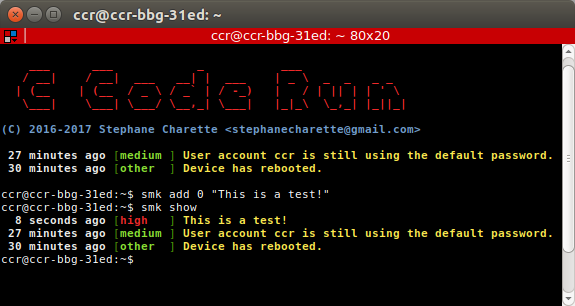
By adding a call to "smk show" in ~/.bashrc or /etc/profile.d/, messages can easily be shown immediately upon login. This screenshot also shows a customizable banner message from ccr_user in BBTools.
 1.8.13