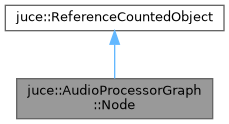
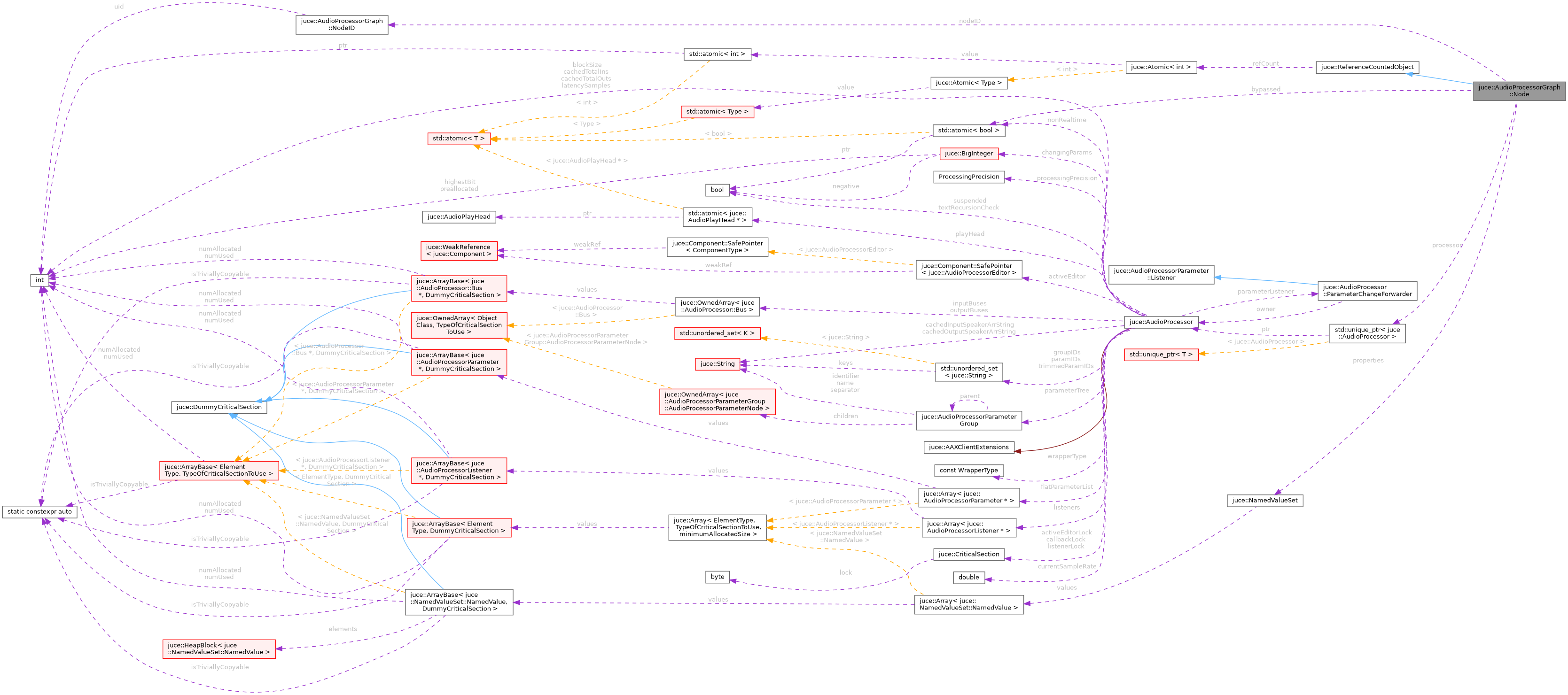
Represents one of the nodes, or processors, in an AudioProcessorGraph.
More...
#include <juce_AudioProcessorGraph.h>
|
| void | resetReferenceCount () noexcept |
| | Resets the reference count to zero without deleting the object.
|
| |
Represents one of the nodes, or processors, in an AudioProcessorGraph.
To create a node, call AudioProcessorGraph::addNode().
◆ Ptr
A convenient typedef for referring to a pointer to a node object.
◆ Node()
◆ decReferenceCount()
| void juce::ReferenceCountedObject::decReferenceCount |
( |
| ) |
|
|
inlinenoexceptinherited |
Decreases the object's reference count.
If the count gets to zero, the object will be deleted.
References jassert.
◆ decReferenceCountWithoutDeleting()
| bool juce::ReferenceCountedObject::decReferenceCountWithoutDeleting |
( |
| ) |
|
|
inlinenoexceptinherited |
Decreases the object's reference count.
If the count gets to zero, the object will not be deleted, but this method will return true, allowing the caller to take care of deletion.
References jassert.
◆ getProcessor()
| AudioProcessor * juce::AudioProcessorGraph::Node::getProcessor |
( |
| ) |
const |
|
inlinenoexcept |
The actual processor object that this node represents.
◆ getReferenceCount()
| int juce::ReferenceCountedObject::getReferenceCount |
( |
| ) |
const |
|
inlinenoexceptinherited |
Returns the object's current reference count.
◆ incReferenceCount()
| void juce::ReferenceCountedObject::incReferenceCount |
( |
| ) |
|
|
inlinenoexceptinherited |
Increments the object's reference count.
This is done automatically by the smart pointer, but is public just in case it's needed for nefarious purposes.
◆ isBypassed()
| bool juce::AudioProcessorGraph::Node::isBypassed |
( |
| ) |
const |
|
inlinenoexcept |
◆ resetReferenceCount()
| void juce::ReferenceCountedObject::resetReferenceCount |
( |
| ) |
|
|
inlineprotectednoexceptinherited |
Resets the reference count to zero without deleting the object.
You should probably never need to use this!
◆ setBypassed()
| void juce::AudioProcessorGraph::Node::setBypassed |
( |
bool |
shouldBeBypassed | ) |
|
|
inlinenoexcept |
Tell this node to bypass processing.
◆ userRequestedBypass()
| bool juce::AudioProcessorGraph::Node::userRequestedBypass |
( |
| ) |
const |
|
inline |
Returns true if setBypassed (true) was called on this node. This behaviour is different from isBypassed(), which may additionally return true if the node has a bypass parameter that is not set to 0.
◆ bypassed
| std::atomic<bool> juce::AudioProcessorGraph::Node::bypassed { false } |
|
private |
◆ nodeID
| const NodeID juce::AudioProcessorGraph::Node::nodeID |
The ID number assigned to this node.
This is assigned by the graph that owns it, and can't be changed.
◆ processor
| std::unique_ptr<AudioProcessor> juce::AudioProcessorGraph::Node::processor |
|
private |
◆ properties
A set of user-definable properties that are associated with this node.
This can be used to attach values to the node for whatever purpose seems useful. For example, you might store an x and y position if your application is displaying the nodes on-screen.
◆ refCount
| Atomic<int> juce::ReferenceCountedObject::refCount { 0 } |
|
privateinherited |
The documentation for this class was generated from the following file:


 1.9.8
1.9.8